ORIC Training in Kansas City Spurs New Momentum for Research Impact
Posted On: 06-24-2025
Posted In: ORIC Spotlight,
From June 1 to 4, 2025, the Crossroads Hotel in Kansas City hosted the inaugural convening of the 2025–27 ARIS ORIC (Organizational Research Impact Capacity) cohort. Four institutions—California State University, Fresno; Stanford University; the University of Colorado Boulder; and the University of Toronto—came together to brainstorm, strategize, and formulate plans to integrate research impact in society into their institutional infrastructures.
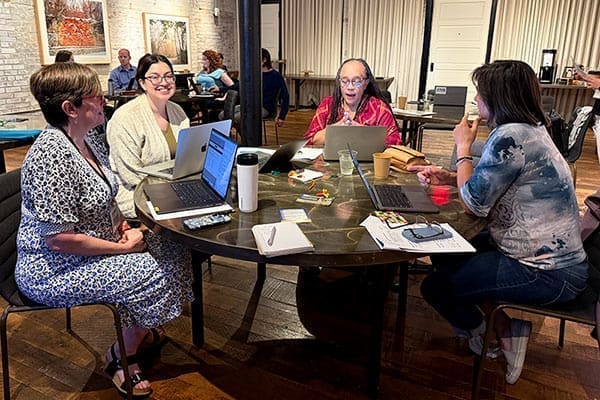
The training was hands-on and highly collaborative, featuring expert sessions on evaluation, strategic planning, research communication, and impact measurement. The agenda focused on action: participants created institutional strategic plans and participated in coaching sessions designed to address real-world challenges in systematizing research impacts in their contexts.
For participants, the experience was transformative. “Being part of the ORIC cohort represents a strategic opportunity for CU Boulder to deepen and systematize our commitment to community-engaged research and the broader impacts of scholarship,” said Karen Regan, Associate Vice Chancellor for Research Development and Strategic Initiatives at the University of Colorado Boulder. “I really value the cohort model and have already learned so much from others’ approaches and perspectives.”
The value of the peer network was echoed by Traci Nagle of Stanford University: “One of the aspects I did not expect but am truly appreciating is the variety of institutions in our cohort. This diversity will expand our idea bank and lead us to look more closely at every stage of our office’s and our PIs’ experiences.”
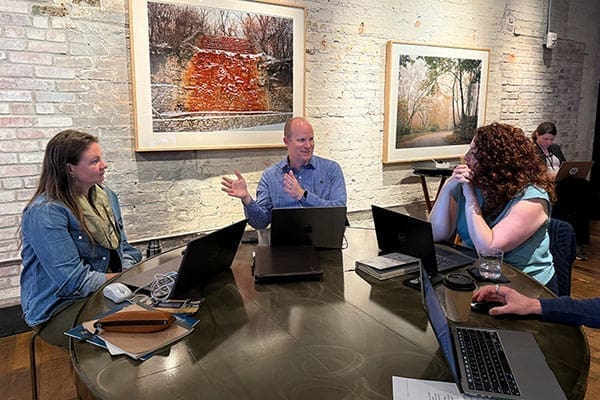
Sessions such as “Building a BI Identity” and “Strategic Thinking” enabled each team to tailor their approach to institutional needs while drawing from ARIS resources like the ARIS Toolkit. “We hope to develop a standardized infrastructure that is adopted across the university,” said Tanya Ennis, CU Boulder’s Director of Research Impact and Engagement. “Institutionally, this work has the potential to transform our society at both the local and state levels, as well as globally. By collaborating across disciplines and departments, we can tackle significant challenges that demand creativity, commitment, humility, and compassion to solve.”
At Fresno State, the cohort is catalyzing efforts to amplify the university’s community-facing research. “I am excited to redefine what ‘impact’ means for our students, faculty, and the community. Our students and faculty do so much in their labs, classrooms, and community, yet this work often goes unrecognized. To me, success is when the public sees the value that Fresno State brings to the Central Valley community,” said Joy Goto, Senior Associate Dean at the College of Science and Mathematics.
The Kansas City gathering marked the beginning of a multi-year journey for these institutions to elevate the societal impact of research. As Jennifer Randles of Fresno State put it, “This is an investment of energy and time by our team, and a challenge I’m excited to face together.” At the conclusion of the convening, each institutional team departed with a roadmap and a support network aimed at highlighting the societal impacts of their research.