ORIC Spotlight: Penn State University
Posted On: 01-22-2025
Posted In: ORIC Spotlight,
Dr. Kathleen Hill is all about momentum right now.
As the Director of Penn State’s Center for Science and the Schools, a 20+ year investment in translating STEM research to precollege education, she stands as the critical support node between Penn State researchers and the surrounding K-12 education system.
The Center supports researchers from proposal development to implementation to evaluation of their Broader Impacts (BI) plans. It serves as a hub for research translation, co-constructing the BI plans with faculty and graduate students to make cutting-edge research accessible to precollege learners. “CSATS is sort of the one stop shop for researchers to build and implement robust programs for K-12 educators,” she explained.
.
A Need to Elevate
According to Dr. Hill, there’s nothing quite like CSATS at Penn State. Situated under the College of Education, she wants to use ORIC and the university admin partnerships to elevate this type of translational work to a higher institutional level.
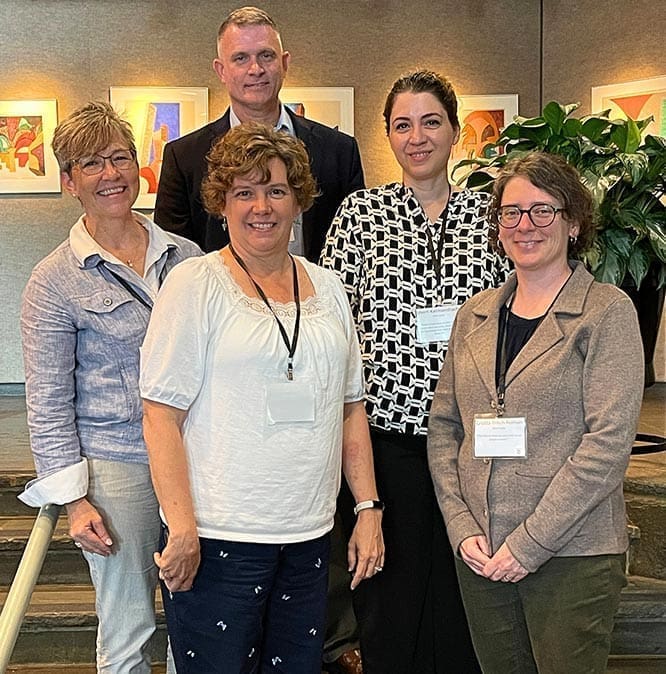
Penn State’s ORIC team consists of Hill, Rita Graef (Director of the Pasto Agricultural Museum and Armsby Respiration Calorimeter Historic Site), Dr. Gretta Tritch-Roman (Director of Research Development and Initiatives), and Dr. Douglas Wolfe (Associate VP for Research and Director of Strategic Initiatives; Office of the Vice President for Research). The unique nature of ORIC, the partnership between BI professionals (e.g. Hill) and university administrators (e.g. Wolfe), supports Hill’s goal of elevating the work of the Center and other units to better support Penn State’s researcher needs.
“The opportunity that ORIC provides for university administrators to engage with those in similar positions from other institutions has been extremely beneficial,” Hill reflected. “It has facilitated discussions about critical infrastructure and some of the challenges faced by units such as CSATS.”
What to Fund?
One of these challenges is funding. BI professionals commonly rely on grant funding to support the work that they do; CSATS is no exception. However, grant funding only goes so far.
Depending on how the grants are written and awarded, the administrative work that goes into the BI work often gets left out. Grant funding also does not take into account the consistent effort needed to maintain relationships with school districts and other external partners.
Hill and her team spend a good portion of their work fostering, maintaining, and repairing relationships Penn State has with surrounding community partners. “Early on, I recognized that we did not have great working relationships with some school districts,” she explained. “It has required considerable time and effort to rebuild and reestablish those relationships to be positive.” As such she is protective of these relationships and works to communicate the value of those relationships with others in her institution.
“These partners are critical for our success and are certainly woven into how we can sustain research.” She outlined. By elevating translational work to the university level, this means more university funding for BI in full, admin work and all. “It’s an investment in the people with the right expertise.”
Connecting within Penn State
Hill has also discussed this vision with others outside of the Penn State ORIC team. For example, she’s chairing the Research Impacts Working Group at Penn State, comprised of administrators from all across the university.
Hill is in an opportune moment. There are many new faces at Penn State and that means new allies to discuss BI with as they create their strategic plans. “How do we leverage research to make impact? And what kind of unit should we have to make that happen?” She recounted. “Those are the conversations I’m having, and I think there’s some momentum.”
“I’m so glad that they decided to make ORIC a two-year program,” she circled back. “Because I think after the first year is up, it will be super important to have that accountability in implementing our proposed plan.”
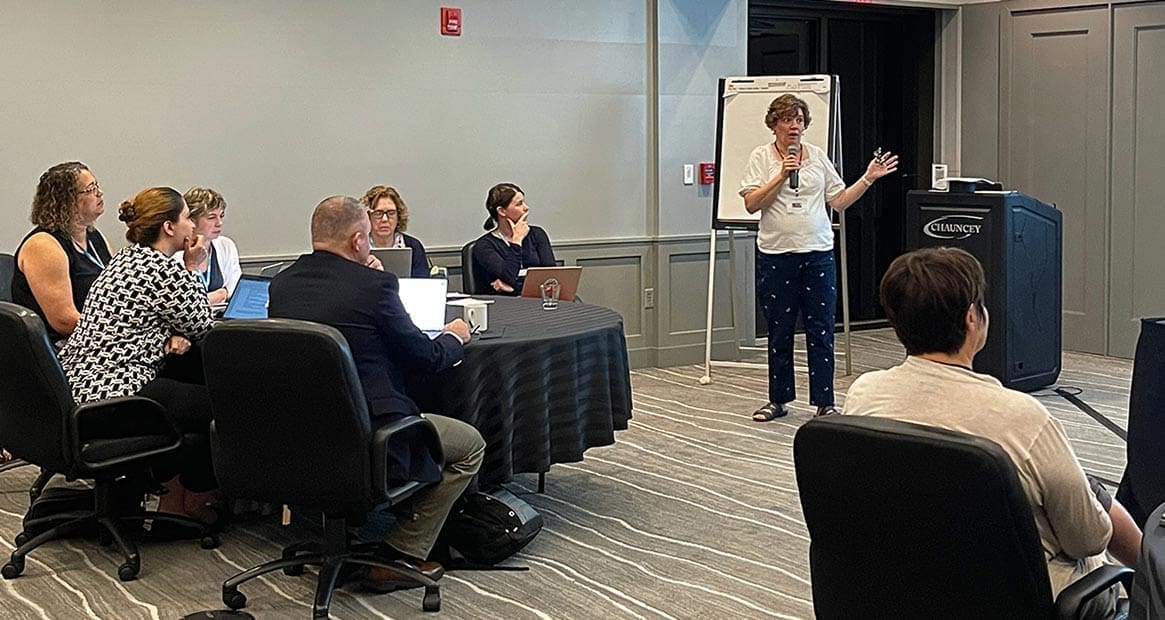
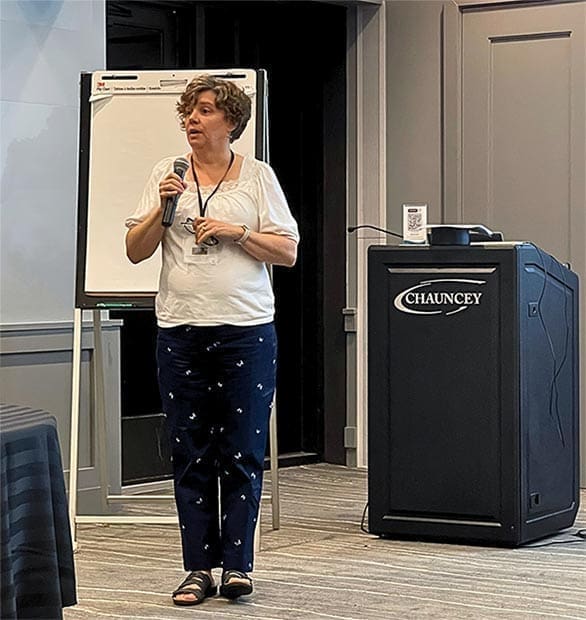
Hill explains the state of BI at Penn State at the ORIC 2024 Princeton Training.